


You’re probably good at what you do. Maybe your work is great. But if that phone isn’t ringing consistently, it doesn’t matter how good you are — and that’s a frustrating place to be.
The truth is, most tradespeople are leaving serious money on the table because the marketing side of the business just hasn’t been sorted. Not because they’re lazy. Because nobody showed them what actually works.
So here it is. No fluff, no generic advice — just 17 things that genuinely move the needle. We’ve ranked these in order of impact, counting down to number one — the single biggest thing you can do right now to get more leads coming in. Stick with it, because the further down you get, the more important it becomes.
17. Build a Website That Actually Converts
You’d be surprised how many trade websites are basically useless. Not ugly necessarily — just not optimised to convert traffic into customers.
Your website needs to cover the basics. Your phone number needs to be at the top of the page and it needs to be tappable on mobile. That sounds so simple, but go and check your competitors right now — many of them won’t be doing it.
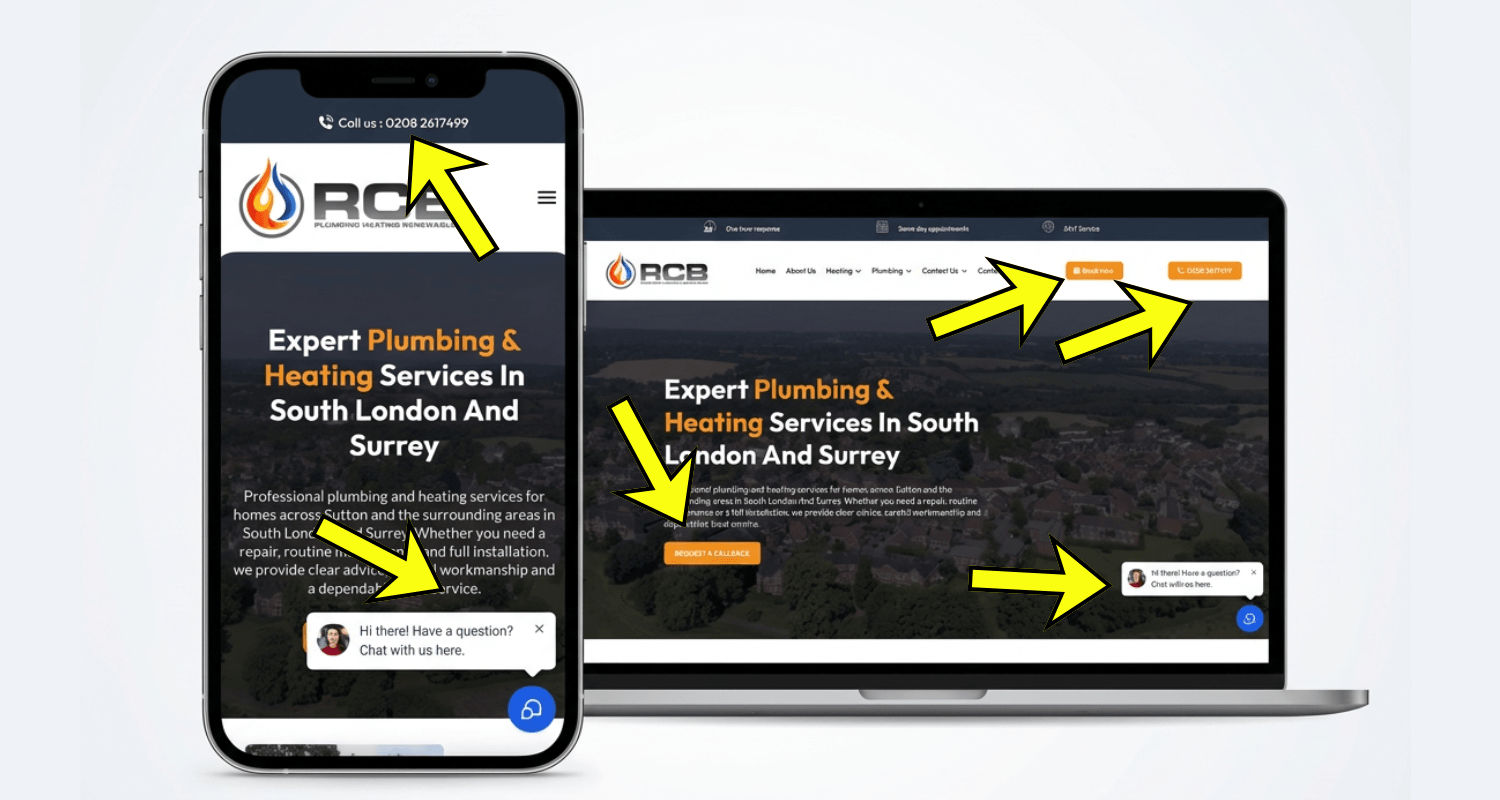
Reviews need to be on there too. Not screenshots — nobody trusts a screenshot of a review. You want customers to instantly trust you, and the saying is true: people buy what other people buy.
If someone can see that others have had a great experience with your company, they’re far more likely to use you — and even spend a bit more. You probably know this yourself. When you book a hotel, you’ll pay extra for the one with better reviews.
Use something like Elfsight to pull your real Google or Trustpilot reviews directly onto the site. Live, verified, and updating automatically. That’s what builds trust with someone who’s never heard of you.
Use real photos of your work. Stock images of a smiling man in a hard hat aren’t convincing anyone. Show the actual jobs you’ve done — the messy before, the finished after, the team on site. That’s what sells.
And build for mobile first. Most of your traffic is coming from someone’s phone. If your site loads slowly or looks broken on mobile, those potential customers will bounce straight off and use someone else.
16. Claim Your Google Business Profile
If this isn’t done yet, it’s one of the highest priority things on this list. Head to google.com/business and claim it today. It’s free and it’s probably the most valuable piece of online real estate available to a local trade business.
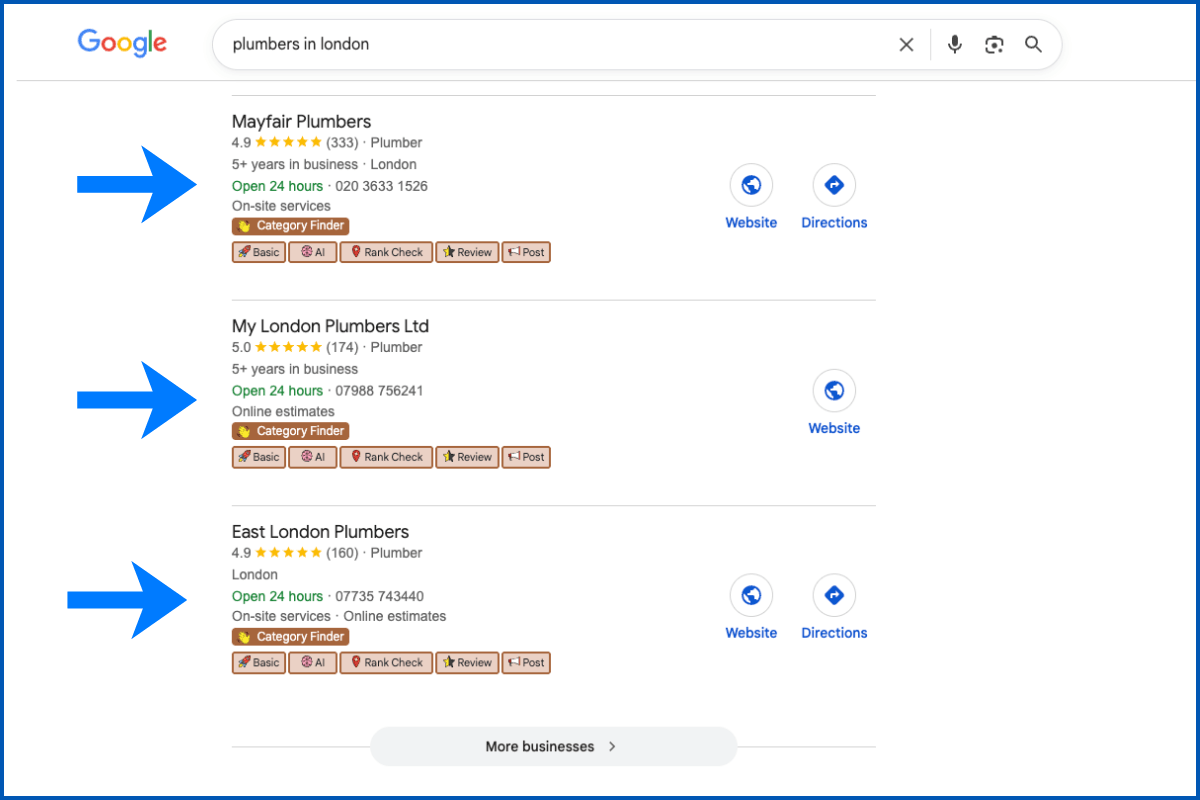
Once you’re in, look at the top three businesses showing up in your area. What primary category are they listed under? Your primary category is a major ranking factor — get it wrong and you’re fighting an uphill battle before you’ve even started.
Then it comes down to being the best option on the page. Someone searching for a roofer in their town is going to call the business with 150 reviews and a 4.9 score before they call the one with 12 reviews and a 4.1. That’s just human nature. So get more reviews, post on your profile a couple of times a week, and keep it stacked with real images of your work.
15. Get Reviews on Multiple Platforms — Not Just Google
Most people know reviews matter. Fewer people know that where those reviews are matters too.
A rough rule that works well — put about 80% of your review effort into Google Business Profile. That’s your main priority. The other 20% should be spread across Trustpilot, Checkatrade, or Facebook.
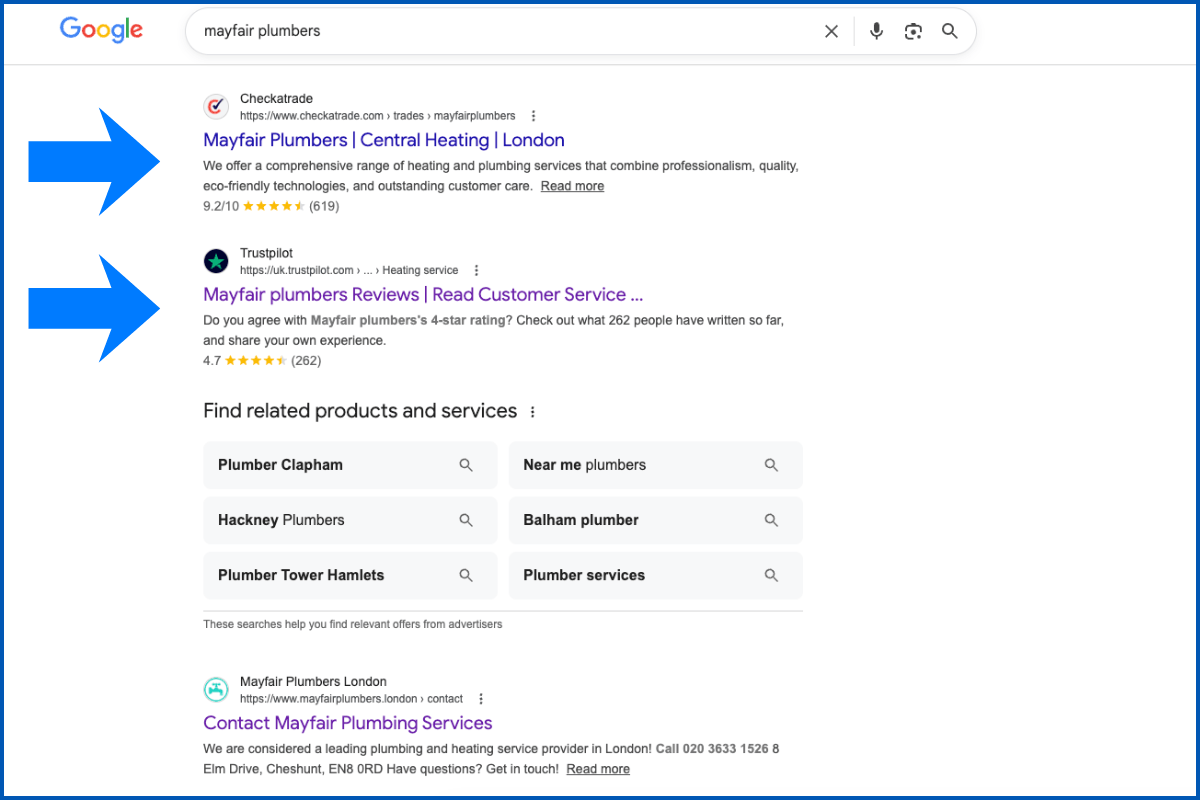
Here’s why that matters beyond the obvious. Google looks at your presence across multiple platforms and uses it as a trust signal. A business with reviews in lots of places looks more legitimate than one that’s only got Google reviews. And increasingly, AI tools are pulling data from all of these platforms when someone asks “who’s the best electrician in Manchester?” — pulling from multiple review sources to recommend the best option. You want your name coming up everywhere.
14. Post on Social Media — Keep It Simple
Social media doesn’t need to be complicated. Genuinely. The tradespeople doing well on social media aren’t running slick content strategies — they’re just showing their work, consistently.

Before and after photos. Finished jobs. The occasional behind-the-scenes clip. That’s it. People are naturally nosy — they want to see the transformation, and it builds a huge amount of trust when someone can scroll through your page and see job after job of quality work.
For videos, download CapCut and search “before and after” in the templates. Pick one, drop your clips in, post it. It takes about ten minutes, looks genuinely good, and it’s completely free.
The bigger thing though — don’t just post on Facebook. Take that exact same piece of content and put it on Instagram, TikTok, YouTube Shorts, LinkedIn, X, and your Google Business Profile. One job becomes seven posts across seven platforms. Your reach multiplies without any extra work, and Google starts seeing your name popping up all over the internet. That’s quietly powerful for SEO — and for AI results too.
13. Optimise Your Website For Local SEO
This is one of those things that feels technical but really isn’t once you understand the logic behind it.
Google wants to send people to the most relevant result for what they searched. So if someone types “boiler repair Basildon,” Google is looking for a page that’s specifically about boiler repair in Basildon — not a generic homepage that mentions both somewhere in the middle.
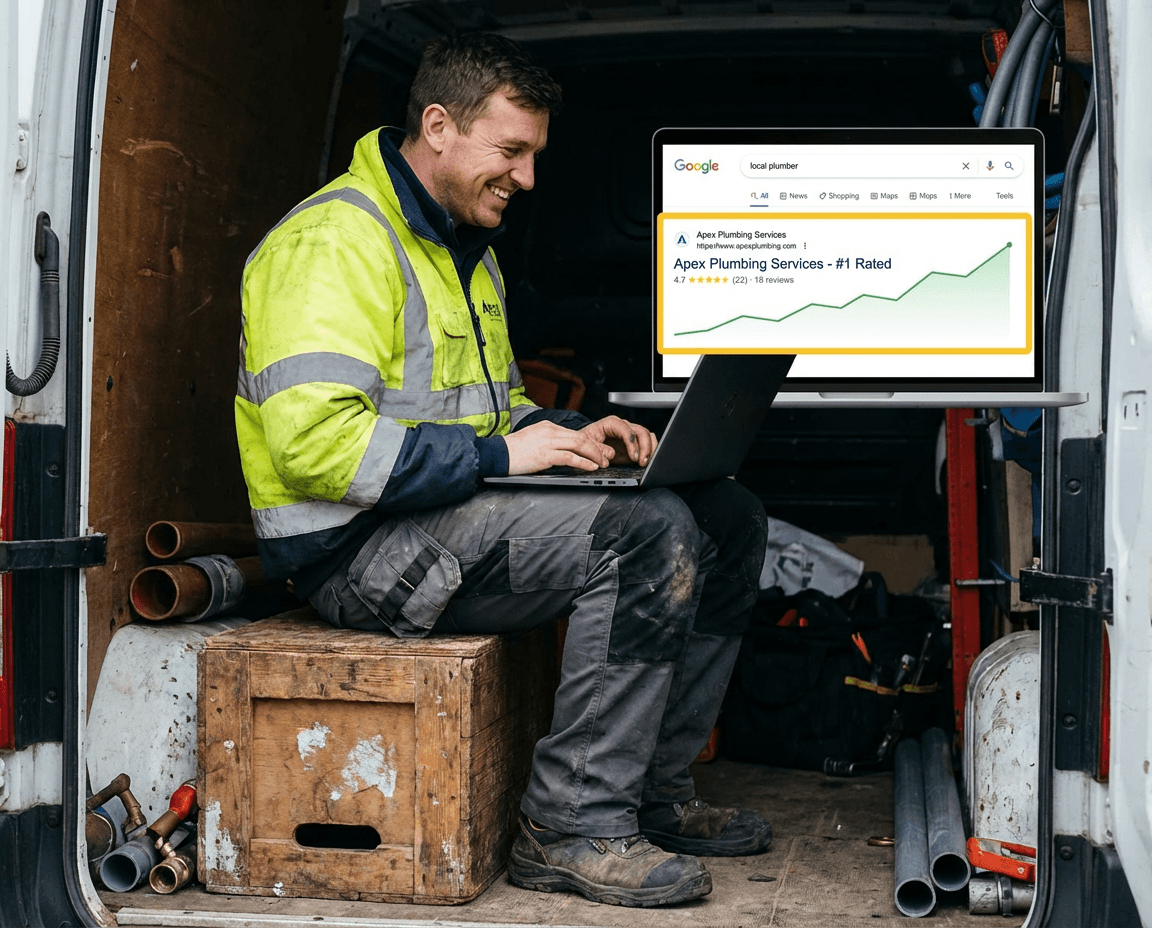
The approach that works is building out individual pages for every service you offer, and then separate location pages for every town you cover. So if you’re a plumber in Southend, your homepage targets “plumber Southend.” Then you’ve got pages for “boiler installation Southend,” “drainage Southend,” and so on. Then town pages — “plumber Basildon,” “plumber Rayleigh,” “plumber Chelmsford.”
Each page targets one thing. Over time, you start ranking for all of them. It takes a bit of work to set up but once it’s done, it generates leads without you having to touch it.
12. Run Google Ads — But Target Properly
Google Ads works. It genuinely does. But it’ll drain your budget fast if you go in without knowing what you’re doing.
The mistake most people make is targeting keywords that are too broad. If you’re a roofer and you target the keyword “roofers,” you’re going to get clicks from people doing research, people in different cities, people who aren’t ready to buy. You’re paying for all of that.
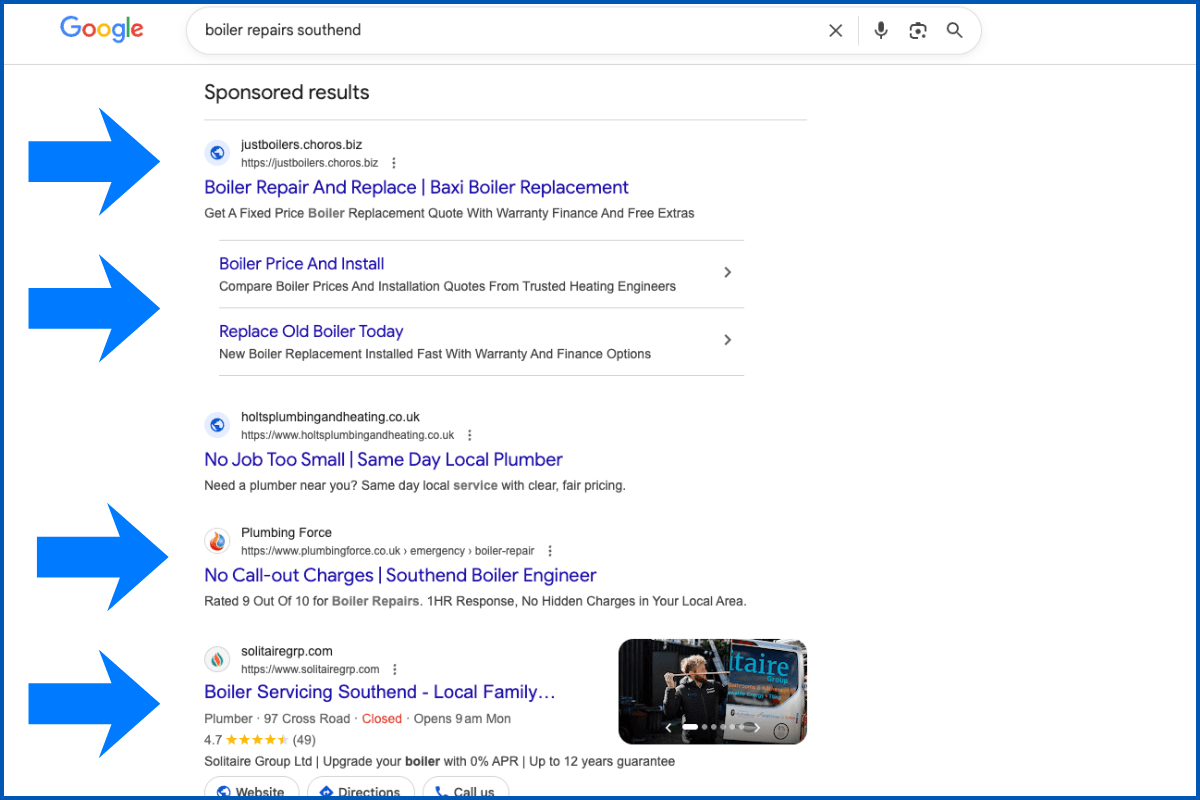
What you want are high buyer intent keywords. “Roofer near me.” “Emergency roofer tonight.” “Roof repair quote.” These are people who need someone now — the search itself tells you they’re ready to pick up the phone.
Tighten the targeting, exclude anything irrelevant with negative keywords, and track every single enquiry back to the keyword that triggered it. That’s how you make Google Ads profitable rather than a painful drain on your budget.
11. Set Up Google Local Services Ads
Local Service Ads sit right at the very top of Google. Above the regular paid ads. Above the map. Above everything. And unlike standard Google Ads, you pay per lead — not per click.
Sign up at www.business.google.com/uk/ad-solutions/local-service-ads. You’ll need to verify your public liability insurance as part of the process, but it’s straightforward enough.
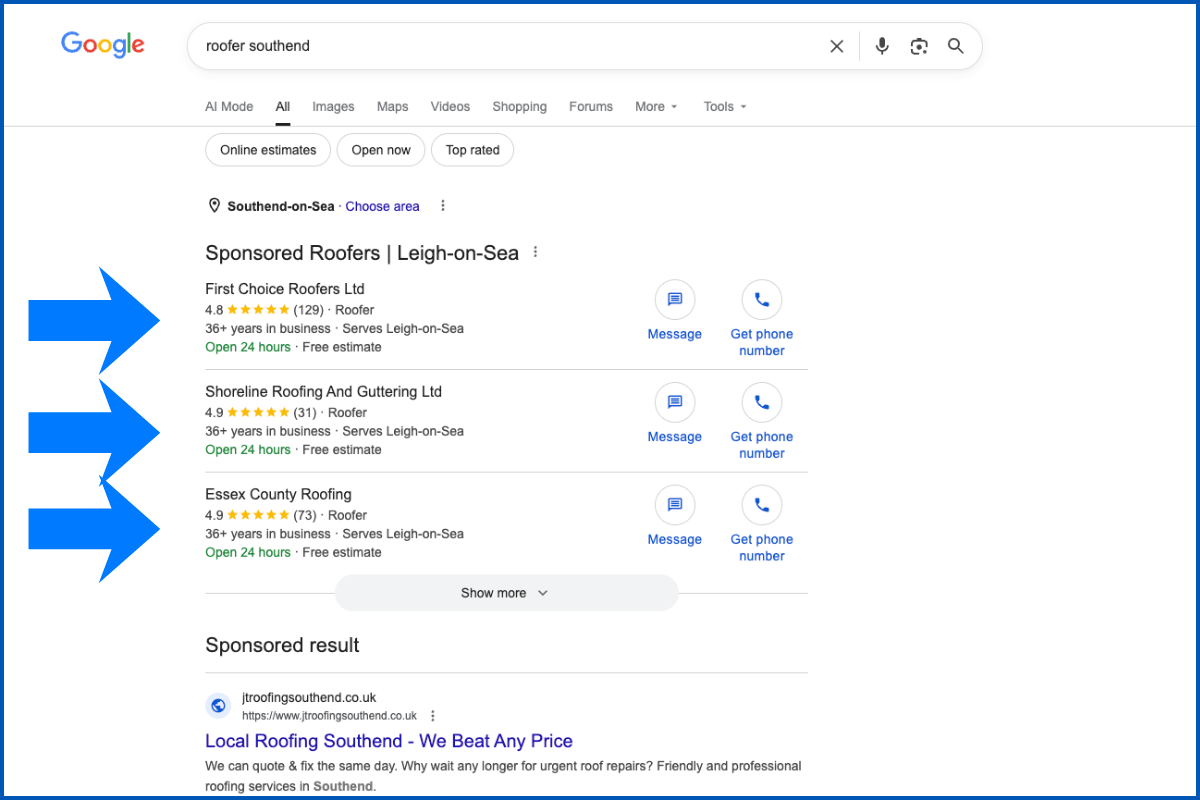
When you’re live, two things will determine how well it performs. First — reviews. You need to keep collecting them every single month because Google uses your score to decide how prominently to show your listing. We’ve seen accounts completely fail on Local Service Ads even with 100 reviews, simply because they hadn’t received a new one in six months. Google wants to know that people are currently having a good experience with your business, so getting reviews monthly matters. We’ve found one to two a week is the sweet spot. Second — answering the phone. If calls go unanswered, Google notices and your visibility drops fast. It can be surprisingly hard to recover from, so make sure someone is always picking up.
When it’s running well, this is genuinely one of the most cost-effective lead sources we’ve seen for trade businesses.
10. Submit to Free and Paid Online Directories
This isn’t the most exciting one on the list, but it works — and a lot of it is free, so there’s really no reason not to do it.
Platforms like Yell, Free Index, and Thomson Local get real traffic from people looking for local tradespeople. Submit your business, fill out the profile properly with your services and location keywords, add images, and make sure your website is linked. That backlink alone has SEO value.

There are also loads of local and niche directories worth looking into. If you’re based in Southend, submitting to something like southendbusinessdirectory.co.uk will help with local visibility. And if you’re a plumber, getting listed on a platform like watersafe.org.uk builds both local and service relevance — Google will rank you higher, and you get direct exposure on those platforms too.
A few hours of work, and it quietly contributes to your local search presence in the background. Tick it off and move on.
9. Deliver a Service Worth Talking About
No marketing strategy in the world fixes a bad reputation. If the work isn’t up to scratch, if customers feel overcharged, if nobody hears back after the job is done — the business will struggle long term regardless of how good the advertising is.

Word of mouth is still the most powerful lead source in the trades. But it cuts both ways.
Think about every part of the customer experience. How quickly do you respond to enquiries? How do you handle the quoting process? Do you follow up when you said you would? What does the aftercare look like once the job’s finished? All of it matters. The businesses that grow consistently aren’t just good at the trade — they’re good at the whole experience around it.
8. Create Promotions People Can't Say No To
Having 10% off your services is vague, not exciting, not memorable, and it’s not going to make someone pick up the phone.
The promotions that actually work are the ones where the customer genuinely thinks they’d be mad to miss out. Say you install garden rooms or property extensions — something like “free underfloor heating included this month only” is the kind of offer that stops someone mid-scroll. It costs you something, but it’s affordable, and it moves people off the fence who might otherwise have gone with a competitor.

Think about what you can offer that feels genuinely valuable, doesn’t wipe out your margin, and creates a real reason to act now rather than “maybe next month.”
7. Build Recurring Revenue Into Your Business
This is massively underrated, and most tradespeople never think about it properly.
If you’re a boiler engineer, every installation is a chance to offer a monthly service plan or annual check-up contract. If you’re in landscaping, there’s grounds maintenance. Cleaning businesses live on regular contracts. Whatever your trade, there’s almost certainly a way to package something into repeat income. Here are a few examples:
Plumbers — A yearly home plumbing maintenance plan covering annual inspections, leak checks, pressure tests, priority callouts, and discounts on repairs.
Roofers — An annual roof inspection and gutter maintenance plan including yearly roof checks, gutter cleans, moss treatment, minor repairs, and storm damage assessments.
Electricians — A home electrical safety plan with yearly safety checks, fuse board inspections, socket testing, and priority callouts.
Air conditioning engineers — An annual servicing plan covering yearly services, filter cleans, gas checks, performance tests, and priority breakdown response.
Drainage companies — An annual drain maintenance plan including yearly drain cleans, CCTV checks, blockage prevention, and priority emergency callouts.
Even a modest base of recurring revenue completely changes how the business feels. You stop starting every month from zero, wondering where the next job is coming from. That’s a different way to run a business entirely.
6. Make Your Van and Signage Work for You
Your van is driving around your target area every single day. If it’s a plain white van with your name in small letters on the side, that’s a wasted opportunity.

Proper van signage — professionally designed, easy to read at a glance, with your number prominent — gets seen by hundreds of people daily. People in traffic, people on their street, people outside the job you’re parked at. It builds familiarity, and familiarity builds trust. Go bold with your branding, make it recognisable, and stand out.
Job boards outside properties work the same way. People walk past, clock the board, take a photo of the number. It happens more than you’d think. Business cards still matter too — leave them with every customer and they’ll pass them on.
5. Stay in Touch With Past Customers
Your past customers are the warmest leads you’ve got. They’ve already used you, they already trust you, and they’re far more likely to use you again or refer you to someone else than a cold prospect is.
And yet most trade businesses never contact them again after the final invoice.
Build a mailing list. Email them with seasonal offers, maintenance reminders, and referral incentives. A “refer a friend and get £100” offer is simple and it works. People love recommending a good tradesperson — give them a reason to actively do it.
Don’t leave that relationship on the table. Reworking old clients is one of the easiest wins in the business.
4. Send Leaflets - Seriously
Leaflets get written off as old fashioned. They’re not. For a local trade business with a solid online presence already in place, they’re an extra layer that builds brand recognition in your area over time.

Aim for at least 10,000 per month in your local area. The cost per thousand is low, and the cumulative effect of someone seeing your van, your job boards, your Google listing, and then getting a leaflet through the door is significant. At that point you’re not an unknown business — you feel like the obvious local choice.
3. Be Visible on Checkatrade and Similar Platforms
Search your trade in your area — something like “plumbers in Chelsea” — and see what comes up. In most parts of the UK, Checkatrade or Trustatrader is sitting on the first page, sometimes right at the top. These platforms have built up serious authority with Google over the years.
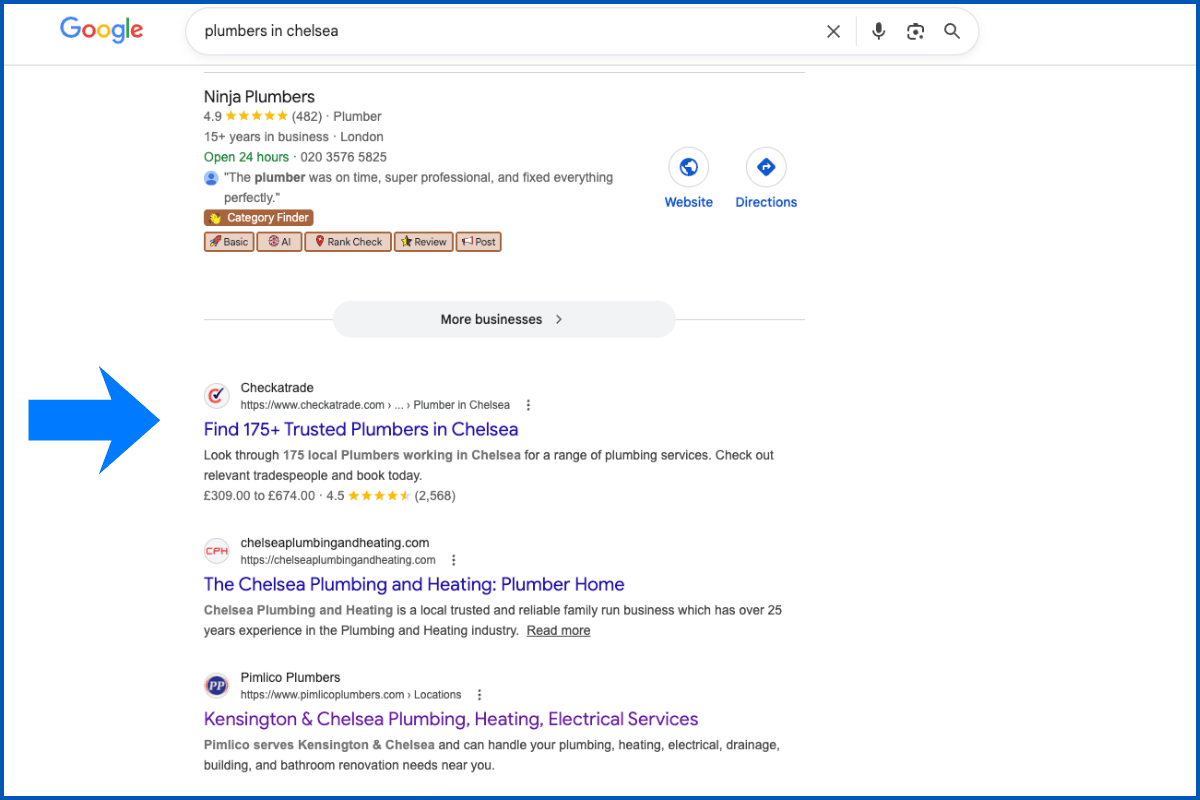
If that’s where your potential customers are looking, you need to be there — and you need to look like the best option. More reviews, higher score, fully completed profile. The same principles apply here as everywhere else. Be the obvious choice.
2. Call Local Builders and Set Up Referral Relationships
This is one of the most underused strategies on this entire list, and it costs nothing but a bit of time and confidence on the phone.
Think about how many builders are operating in your county who carry out full property renovations but don’t have a reliable person for your specific trade. They need someone they can trust and pass work to without it coming back to bite them. That person should be you.
Ring them up. Introduce yourself. Tell them what you do and offer a referral fee for any work they send your way. A handful of these relationships can add serious, consistent revenue — and because the work comes through someone the customer already trusts, it practically converts itself.
1. Get a CRM and Stop Managing Leads in Your Head
This is probably the biggest operational issue we see in trades businesses. Leads tracked on bits of paper, in a notes app, on a spreadsheet, or just floating around in someone’s memory. Quotes go cold. Follow-ups don’t happen. Jobs get forgotten about.
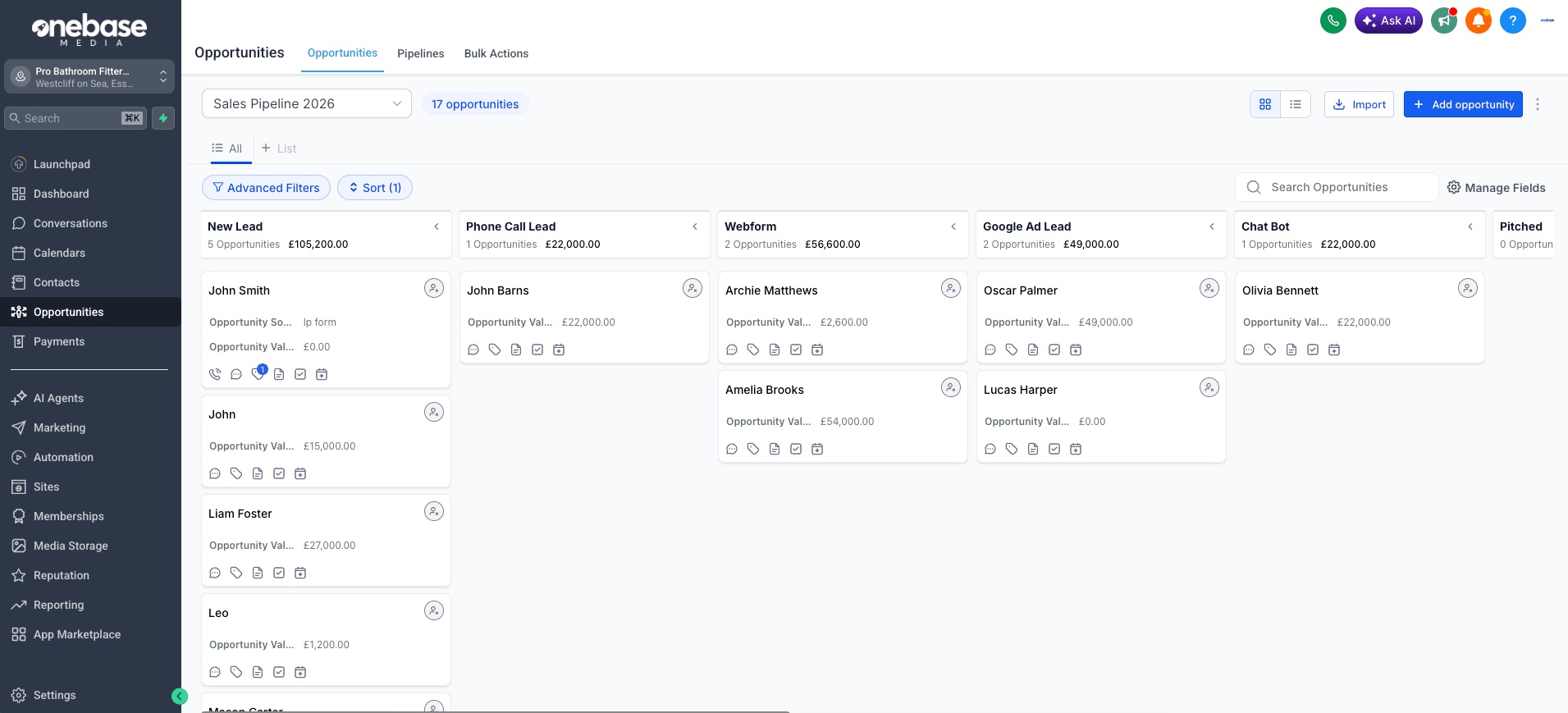
It’s not a discipline problem — it’s a systems problem. And the fix is a proper CRM.
A good CRM gives you one place for every lead. You can see exactly where each job is, who needs a follow-up, what’s been quoted, and what’s been won. You get a clear, real-time picture of what’s coming into the business and what it’s worth.
We’ve built a CRM platform specifically designed for trade businesses — you can download it as an app and manage everything from your phone, whether you’re on site, in the van, or at home. No spreadsheets. No sticky notes. No missed leads.
If you’re serious about growing, getting this sorted isn’t optional.
Let's Grow Your Trade Business
There’s no single magic bullet here — and anyone who tells you otherwise is selling something. Growth comes from stacking the right strategies together until leads are coming in consistently from multiple directions.
The businesses winning in the trades right now are showing up online properly, delivering a service people talk about, and staying visible in their local area week after week. That’s the formula.
If you want help putting any of this into practice — whether it’s your website, Google profile, ads, or getting your leads under control — get in touch. We work with trade businesses every day and we know what works.
Contact us today and let’s talk about growing your business.