


A surprising number of Shopify stores sell products people genuinely want, yet still struggle to attract meaningful organic traffic. The demand is there. The category is active. Competitors are clearly picking up search visibility. And still, the store plateaus.
At first glance, that feels counterintuitive. If shoppers are actively searching for what you sell, shouldn’t rankings follow naturally?
Not quite.
Strong product demand and strong SEO performance are related, but they are not the same thing. Demand creates opportunity. SEO determines whether your store is structured, written, and technically sound enough to capture it. That gap is where many Shopify brands fall behind.
Demand Doesn’t Automatically Translate Into Discoverability
Shopify is excellent at helping merchants launch quickly. It removes friction from ecommerce operations, which is part of why so many brands choose it. But ease of setup can create a false sense of search readiness.
A store can be visually polished, conversion-friendly, and full of great products while still being difficult for search engines to understand. That happens more often than many teams realise.
Shopify makes selling easy, not ranking easy
The platform handles checkout, product management, and storefront themes well. SEO, however, depends on a different set of decisions: site architecture, internal linking, content depth, crawl efficiency, page intent, and how category pages are positioned in search.
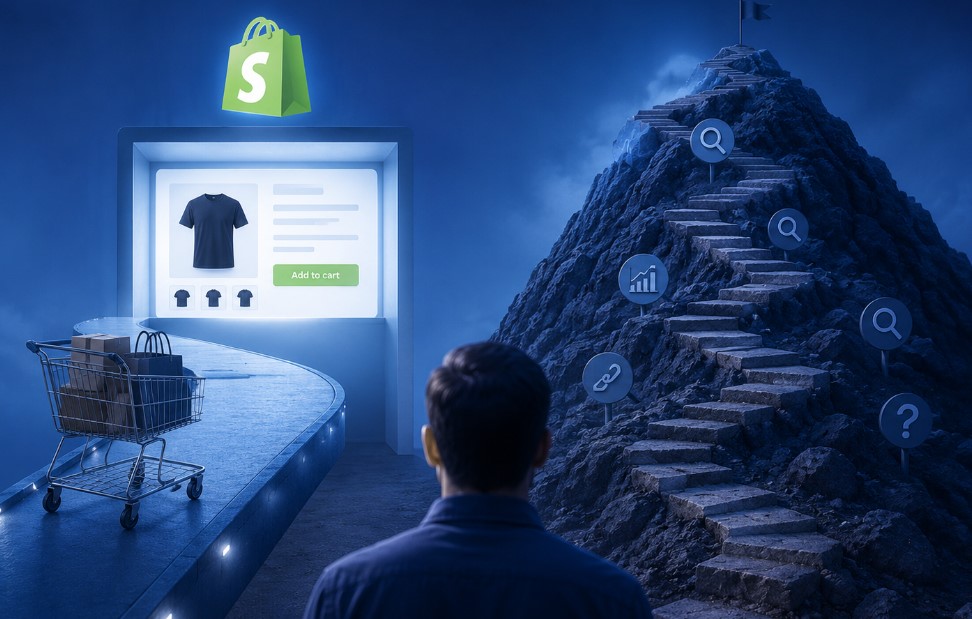
Many merchants assume that once products are uploaded and collections are organised, the fundamentals are covered. In reality, search visibility often breaks down at the structural level. Collection pages target vague terms. Product pages compete with each other. Tags and filtered URLs create noise. And blog content, if it exists at all, is disconnected from commercial pages.
That creates a store that works for existing visitors but underperforms in discovery.
Commercial intent gets trapped in the wrong pages
One of the most common issues is keyword-to-page mismatch. A store might have strong products for “vegan leather tote bags,” for example, but instead of building a robust collection page around that demand, the site spreads relevance across product titles, auto-generated tag pages, and thin collection copy.
As a result, no page becomes the clear ranking candidate.
This is where specialist thinking matters. Brands that invest in a more deliberate approach to organic growth for Shopify brands tend to focus less on simply “adding keywords” and more on assigning clear search intent to the right page types. That shift sounds subtle, but it changes everything: what gets indexed, what earns links, and what actually converts from search.
Technical Blind Spots Quietly Suppress Rankings
Not every SEO problem is dramatic. In fact, many of the issues that limit Shopify performance are fairly mundane, which is exactly why they’re missed.
Duplicate and diluted URLs are common
Shopify stores often generate multiple routes to similar content. Products can appear under different collections. Filtered URLs can multiply rapidly. Pagination and variant handling can muddy canonical signals if not managed properly.
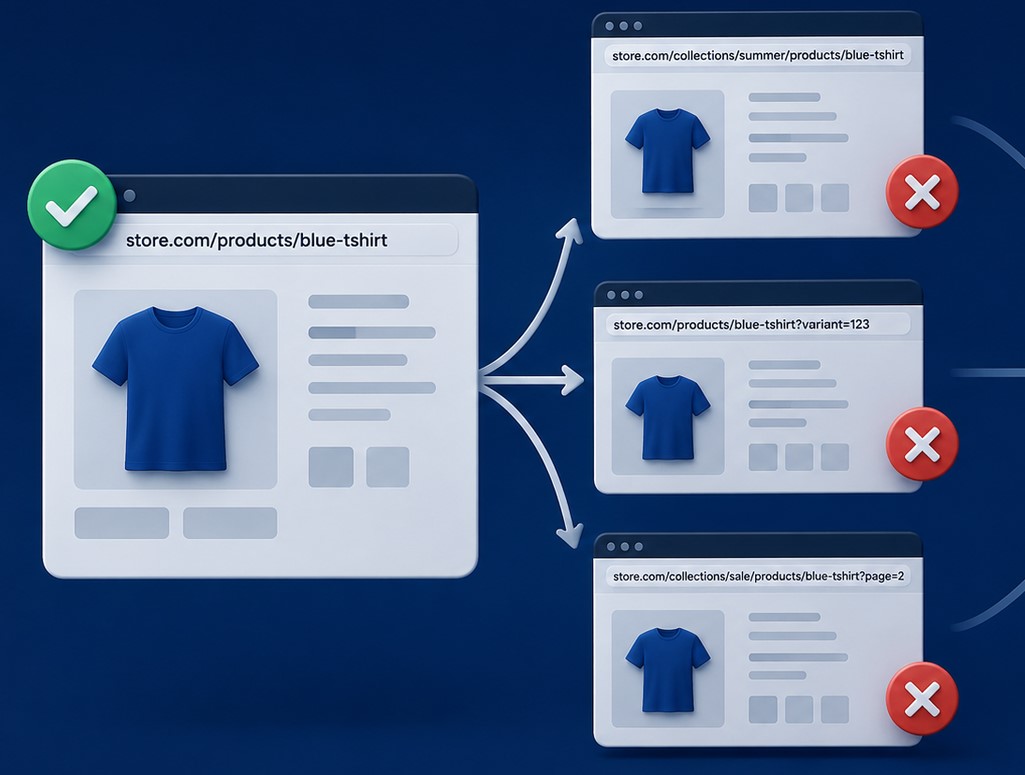
None of this necessarily causes a catastrophic indexing problem on its own. But together, these issues dilute authority and make it harder for search engines to determine which URLs matter most.
For large catalogues, the result is familiar: strong products, weak visibility.
Thin pages create weak ranking signals
A collection page with two lines of copy and a grid of products may be enough for a shopper who already knows the brand. It is rarely enough to compete in organic search for non-branded, high-intent terms.
The same applies to product pages that rely heavily on manufacturer descriptions or minimal detail. Search engines increasingly reward pages that demonstrate depth, specificity, and usefulness. If every product page looks interchangeable, rankings often stagnate.
This is where many Shopify stores get caught out. They assume search demand should carry the page. But Google still needs evidence: relevance, uniqueness, supporting context, and a reason to prioritise that page over dozens of similar alternatives.
Content Strategy Often Ends at the Homepage
Another major failure point is content planning. Plenty of stores understand the importance of keywords in theory, but their actual content footprint is narrow.
Too much focus on products, not enough on discovery
A healthy Shopify SEO strategy does not begin and end with product pages. Buyers rarely move in a straight line from generic search to purchase. They compare options, explore use cases, ask practical questions, and look for reassurance.
If your site only targets bottom-funnel queries, you miss that wider journey.
That means stores often underinvest in:
- Collection pages designed around real category demand
- Comparison or “best for” pages that support purchase decisions
- Guides answering pre-purchase questions
- Educational content that earns links and builds topical authority
Without these assets, the site becomes overly dependent on branded search, paid traffic, or existing awareness.
Blog content is often disconnected from revenue pages
Even when brands publish articles, the content frequently lives in isolation. It may attract occasional visits, but it doesn’t strengthen commercial URLs because internal linking is weak, topic targeting is broad, and the articles are not built around genuine buying pathways.
A post about “how to choose the right running jacket” should support category and product pages for waterproof jackets, lightweight layers, and seasonal collections. Too often, it just sits there, unlinked and under-optimised.
That is not a content problem alone. It is a planning problem.
The Best-Performing Stores Align SEO With Merchandising
The Shopify brands that win in search usually stop treating SEO as a bolt-on channel. They integrate it into how products are grouped, how collections are named, and how the site guides users from interest to purchase.
Site architecture becomes a growth lever
When collection pages reflect real search behaviour, navigation improves. When internal links reinforce commercial priorities, authority flows more effectively. When content supports category discovery instead of chasing random traffic, the entire store becomes easier to rank.
This is less about gaming search engines and more about reducing ambiguity. A well-structured store tells both users and Google exactly what matters.
SEO works best when it reflects how customers actually shop
That may sound obvious, but it is often ignored. Search strategy should mirror customer language, product comparisons, seasonal needs, and common objections. If the store architecture is built around internal naming conventions rather than real demand, visibility suffers.
The stores that break through usually do three things consistently: they map search intent to the right page type, strengthen weak commercial pages with better content and links, and clean up the technical clutter that confuses indexing.
Final Thought
Many Shopify stores don’t fail at SEO because demand is weak. They fail because the site is not built to capture the demand that already exists.
That distinction matters.
If your products are compelling and the market is active, the problem is rarely whether people want what you sell. More often, the issue is whether search engines can clearly identify your most valuable pages, trust their relevance, and connect them to the terms buyers are actually using.
Demand creates the opening. Execution decides who earns the traffic.